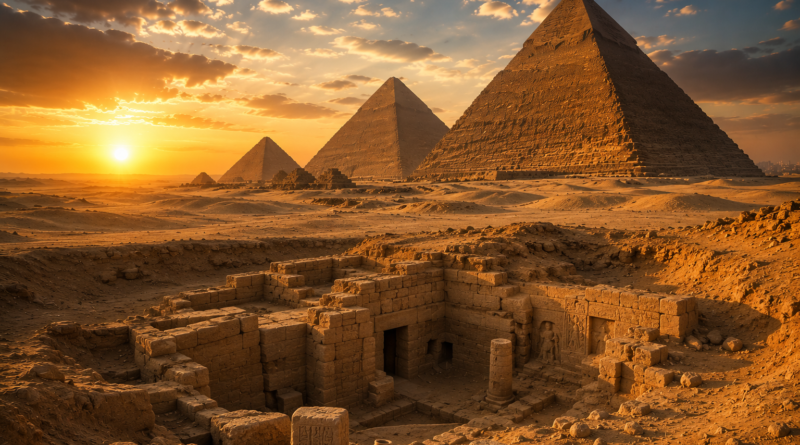
Hidden Ancient Cities Beneath Egypt’s Sands: Discoveries That Changed History
Introduction
Hidden Ancient Cities Egypt continue to fascinate archaeologists as new excavations uncover forgotten settlements, temples, and royal tombs buried beneath the desert sands. For centuries, Egypt’s vast deserts have concealed countless secrets beneath shifting sands. Egypt’s vast deserts have concealed countless secrets beneath shifting sands. While the Great Pyramids of Giza are among the world’s mo, archaeologists continue to uncover forgotten settlements, hidden tombs, and ancient structures buried for thousands of years. These discoveries are transforming our understanding of one of history’s greatest civilizations.
Modern technologies such as ground-penetrating radar, satellite imaging, and careful archaeological excavations have revealed remarkable sites once thought to be lost forever. From buried cities to undiscovered pyramids and royal cemeteries, each new finding adds another piece to the story of ancient Egypt and its extraordinary achievements.
Why Are New Discoveries Still Being Made in Egypt?
Although Egypt has been explored for more than two centuries, only a small portion of its archaeological treasures has been excavated. Vast areas remain covered by desert sands, while many ancient settlements lie beneath modern towns or farmland. Advances in archaeological technology now allow researchers to detect buried structures without disturbing the ground, leading to discoveries that would have been impossible just a few decades ago.
Many experts believe Hidden Ancient Cities Egypt will continue to reshape our understanding of ancient civilization.
Remarkable Discoveries Hidden Beneath the Sands
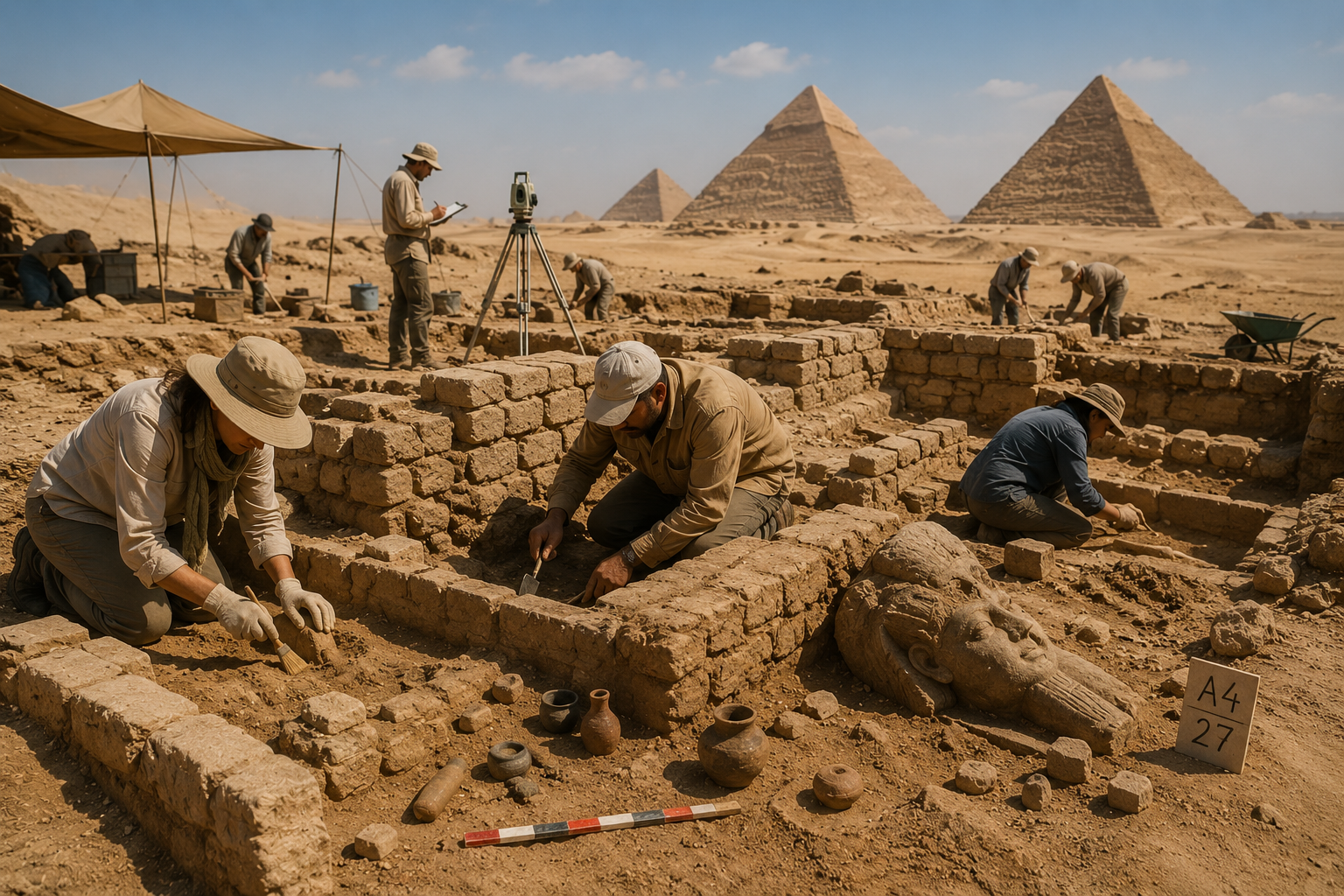
In recent years, archaeologists have uncovered remarkable sites buried beneath Egypt’s deserts. These discoveries include forgotten settlements, ancient temples, royal tombs, workshops, and ceremonial complexes that remained hidden for thousands of years. Many of these locations were preserved by layers of sand, protecting delicate structures and inscriptions from erosion.
Among the most significant discoveries are the remains of entire ancient cities, revealing how ordinary Egyptians lived, worked, and worshipped. Excavations have uncovered homes, streets, storage facilities, tools, pottery, jewelry, and inscriptions that provide an extraordinary glimpse into daily life during the height of ancient Egyptian civilization.
How Modern Technology Is Transforming Archaeology
Today’s archaeologists rely on advanced technologies including satellite imagery, ground-penetrating radar, drone mapping, and 3D scanning to locate buried structures without extensive excavation. These methods allow researchers to identify promising sites more efficiently while minimizing damage to fragile archaeological remains, leading to new discoveries almost every year.
Each new excavation proves that Hidden Ancient Cities Egypt still contain countless historical treasures waiting to be uncovered.
Why These Discoveries Matter
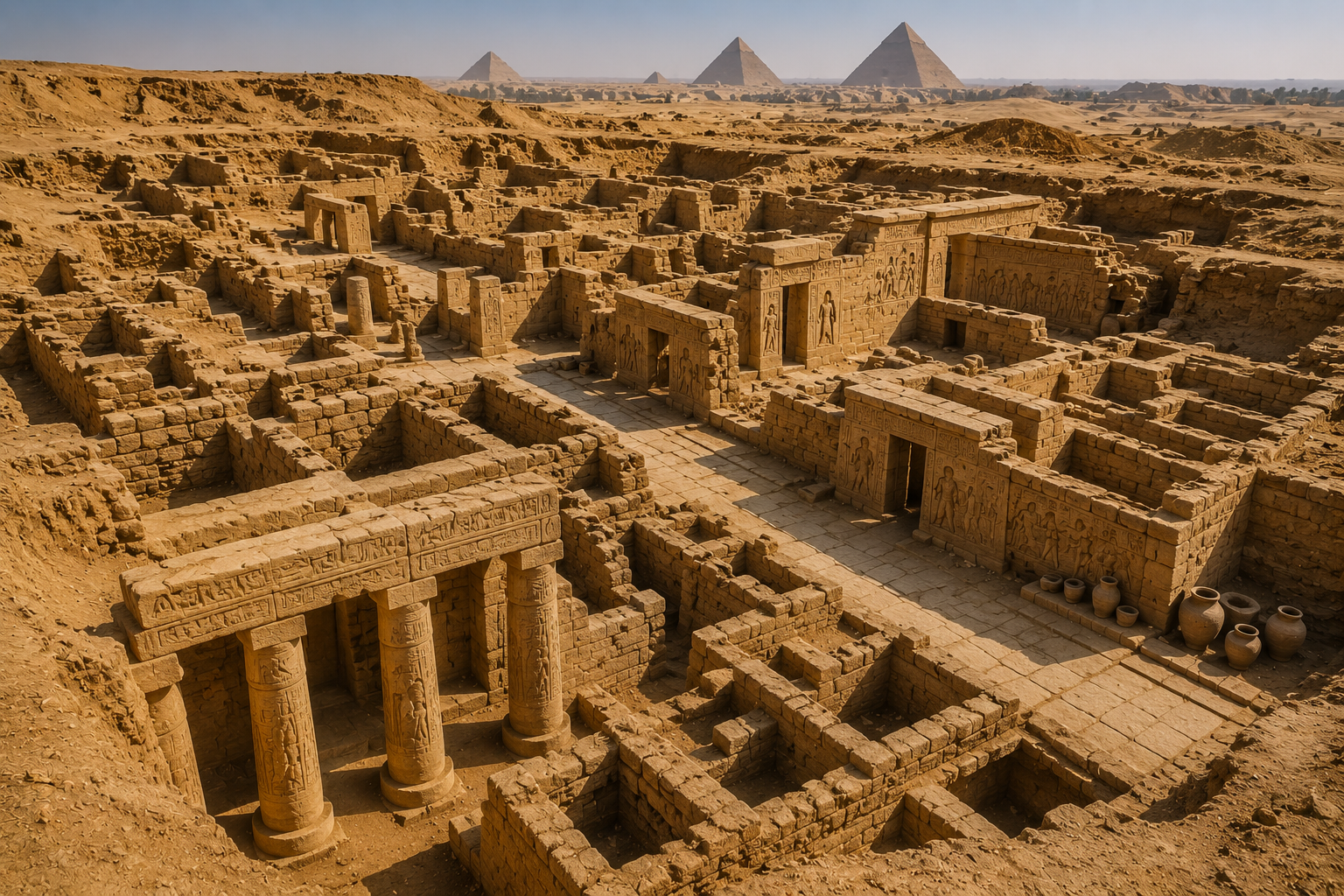
Every archaeological discovery adds valuable knowledge about ancient Egyptian society. Buried cities and forgotten monuments reveal how people built their homes, organized their communities, practiced their religion, and developed technologies that influenced civilizations for centuries. Many discoveries also challenge long-held assumptions, forcing historians to revise their understanding of Egypt’s past.
These findings remind us that much of ancient Egypt still lies hidden beneath the desert. Each excavation has the potential to uncover new artifacts, inscriptions, or structures that reshape the story of one of the world’s greatest civilizations.
The Future of Egyptian Archaeology
As technology continues to improve, archaeologists expect many more discoveries across Egypt’s vast deserts. Artificial intelligence, high-resolution satellite imagery, and non-invasive surveying techniques are helping researchers locate buried sites faster and with greater accuracy. The sands of Egypt still hold countless secrets, making every new excavation an opportunity to uncover another remarkable chapter of human history.
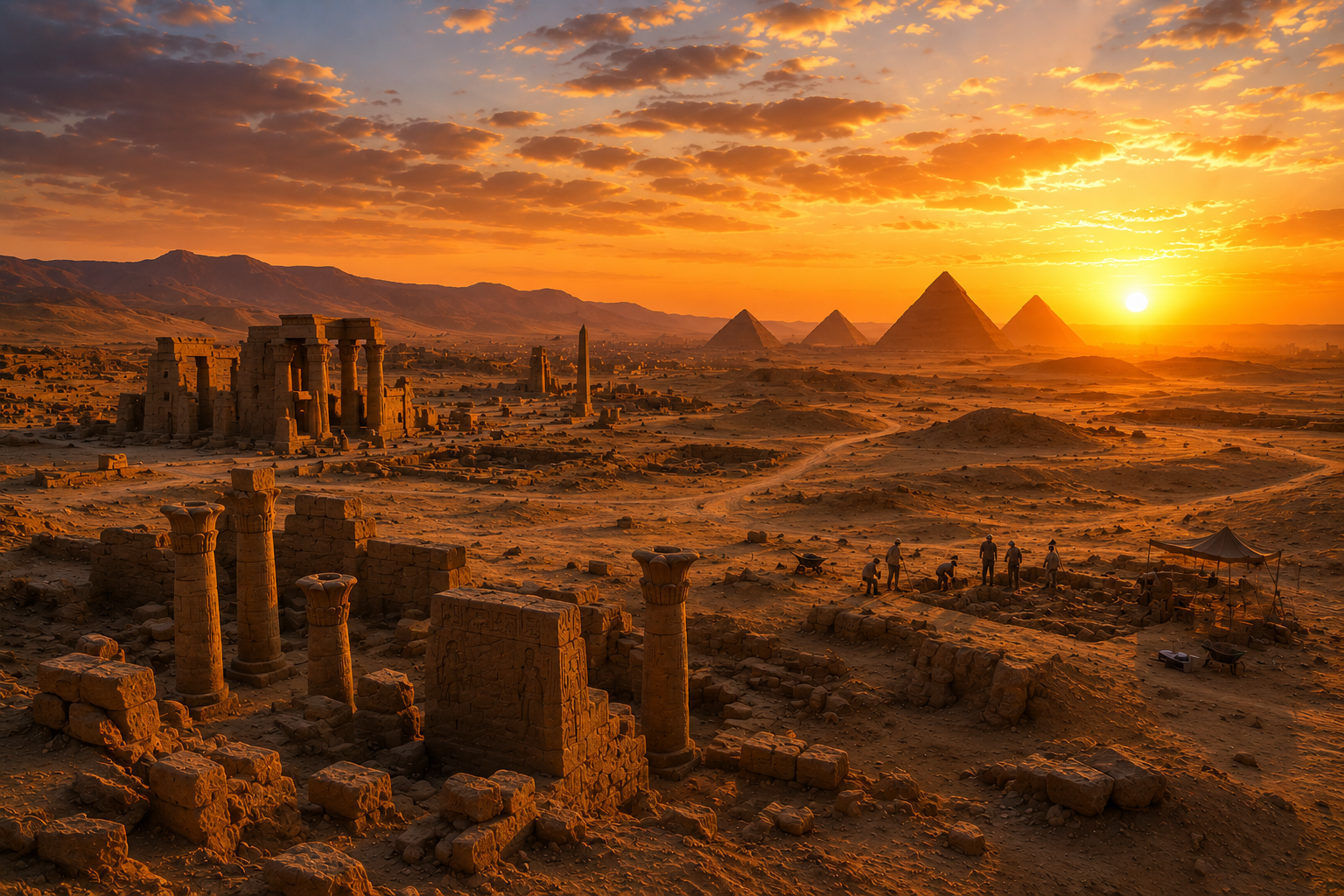
The search for Hidden Ancient Cities Egypt continues to reveal remarkable archaeological discoveries every year.
Conclusion
Egypt’s deserts continue to remind us that history is far from complete. Every excavation uncovers new evidence that deepens our understanding of one of humanity’s greatest civilizations. From forgotten cities and hidden temples to royal tombs and ancient artifacts, each discovery reveals another chapter that had remained buried for thousands of years.
With modern technology advancing every year, archaeologists believe many more remarkable discoveries are waiting beneath the sands. The story of ancient Egypt is still being written, proving that even after centuries of exploration, its greatest secrets may still lie undiscovered.
Related Articles:
- Atlantis: The Lost City That Continues to Fascinate the World
- Lost Maya City Discovered Beneath the Jungle
- The Terracotta Army: China’s Silent Guardians
- The Antikythera Mechanism: The Ancient Computer That Shouldn’t Exist
UNESCO World Heritage Centre – Memphis and its Necropolis – the Pyramid Fields from Giza to Dahshur
What is the Antikythera Mechanism?
The Antikythera Mechanism is a sophisticated ancient Greek mechanical device discovered in a shipwreck near the island of Antikythera. It is widely considered the world’s first known analog computer.
Why is the Antikythera Mechanism called an analog computer?
It used a complex system of bronze gears to calculate and predict astronomical events, including planetary movements, eclipses, and calendar cycles, performing calculations mechanically rather than electronically.
What could the Antikythera Mechanism calculate?
The mechanism could predict solar and lunar eclipses, track the movements of the Sun, Moon, and several planets, display lunar phases, and follow important Greek calendar cycles.
When was the Antikythera Mechanism discovered?
The device was discovered in 1901 by sponge divers exploring an ancient shipwreck near the Greek island of Antikythera in the Aegean Sea.
Who built the Antikythera Mechanism?
The exact inventor remains unknown, but historians believe it was designed by highly skilled Greek engineers and astronomers between approximately 150 and 100 BCE.
Where is the Antikythera Mechanism today?
Most surviving fragments of the Antikythera Mechanism are preserved and displayed at the National Archaeological Museum in Athens, Greece.