The Antikythera Mechanism: The Ancient Computer That Shouldn’t Exist
Introduction
Imagine discovering a machine so advanced that experts initially believed it belonged to a much later civilization. Hidden beneath the Mediterranean Sea for nearly two thousand years, the Antikythera Mechanism challenged everything historians thought they knew about ancient engineering.
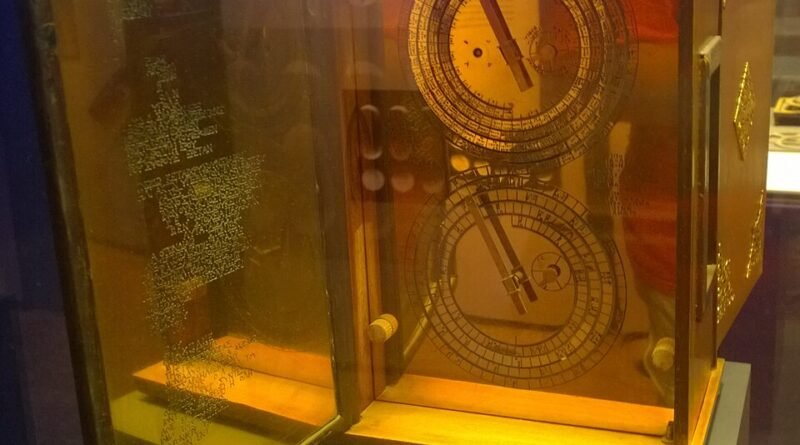
Recovered from a shipwreck near the Greek island of Antikythera in 1901, this remarkable bronze device revealed an astonishing system of precision gears capable of tracking the movements of the Sun, Moon, and planets. For decades, scientists struggled to understand its purpose, but modern imaging technology has uncovered evidence that it functioned as an extraordinarily sophisticated astronomical calculator.
Today, the Antikythera Mechanism is widely regarded as the world’s first known analog computer. Its complexity would not be matched again for more than a thousand years, making it one of archaeology’s greatest discoveries and one of history’s most enduring mysteries.
In this article, we’ll explore who built the Antikythera Mechanism, how it worked, what it could predict, and why it continues to reshape our understanding of ancient science and engineering.
What Is the Antikythera Mechanism?
The Antikythera Mechanism is an ancient Greek mechanical device widely regarded as the world’s oldest known analog computer. Built more than 2,000 years ago, it was designed to calculate astronomical events with remarkable precision, including the movements of the Sun, Moon, planets, eclipses, and important calendar cycles.
The mechanism was constructed from bronze and contained at least 30 interlocking gears, making it one of the most sophisticated machines ever created in the ancient world. Its complexity astonished modern researchers, who initially struggled to understand how such advanced engineering could exist centuries before similar mechanical technology appeared in medieval Europe.
Today, historians believe the device was not simply an astronomical instrument but a scientific calculator that demonstrated the extraordinary mathematical and engineering knowledge of ancient Greek civilization.
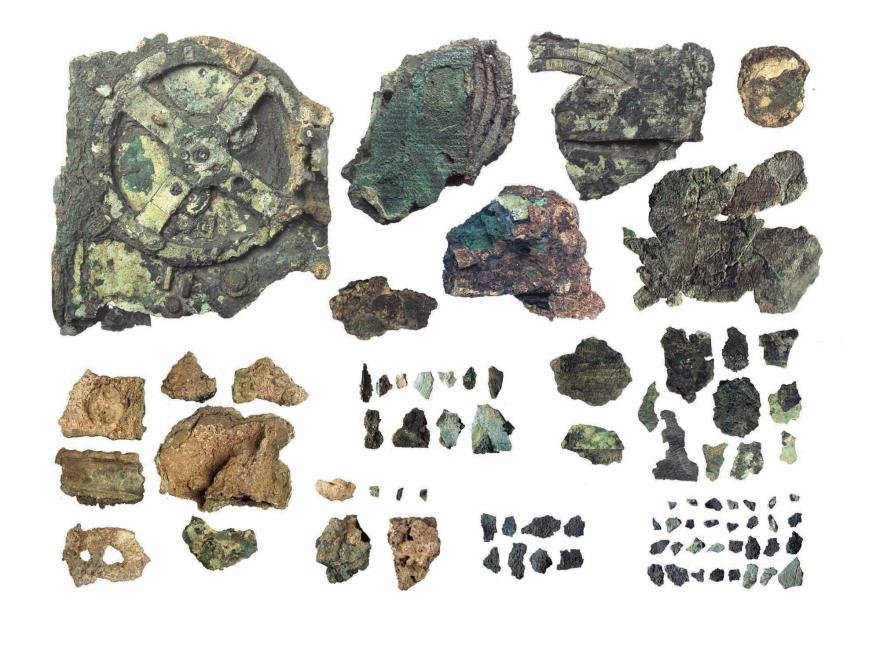
Although many parts of the mechanism are missing, decades of research using X-ray imaging and 3D reconstruction have revealed that it was capable of performing calculations once thought impossible for its time.
Discovery of the Ancient Shipwreck
In the spring of 1901, a group of Greek sponge divers made an extraordinary discovery off the coast of the small island of Antikythera, located between Crete and mainland Greece. While sheltering from a storm, the divers explored the seabed and uncovered the remains of an ancient Roman-era shipwreck lying nearly 45 meters (150 feet) below the surface.
The wreck contained an astonishing collection of artifacts, including marble and bronze statues, coins, jewelry, glassware, and other valuable cargo. Among these treasures was a heavily corroded lump of bronze that attracted little attention at first. No one suspected that this unremarkable object would become one of the greatest archaeological discoveries in history.
Months later, as conservators carefully examined the corroded fragments at the National Archaeological Museum in Athens, they noticed tiny bronze gears hidden inside the object. This unexpected discovery revealed that the fragments belonged to an incredibly sophisticated mechanical device unlike anything ever found from the ancient world.
Who Built the Antikythera Mechanism?
One of the greatest mysteries surrounding the Antikythera Mechanism is the identity of its creator. No inscription directly names the inventor, and no surviving historical document describes its construction. However, historians believe the device was built by highly skilled Greek engineers between 150 and 100 BCE, during the Hellenistic period.
Many researchers associate the mechanism with the scientific traditions of Rhodes, a major center of astronomy, mathematics, and mechanical engineering in the ancient world. Some scholars have even suggested connections with the work of the famous astronomer Hipparchus, whose advanced understanding of celestial motion closely matches several functions of the device. Although no direct evidence confirms his involvement, the mathematical precision of the mechanism reflects knowledge available to only the greatest scientific minds of that era.
Whoever designed the Antikythera Mechanism possessed an extraordinary understanding of astronomy, geometry, and precision engineering. Its intricate gear system demonstrates manufacturing techniques that would not appear again in Europe for more than a thousand years, making it one of the most remarkable achievements of ancient science.
How Did the Antikythera Mechanism Work?
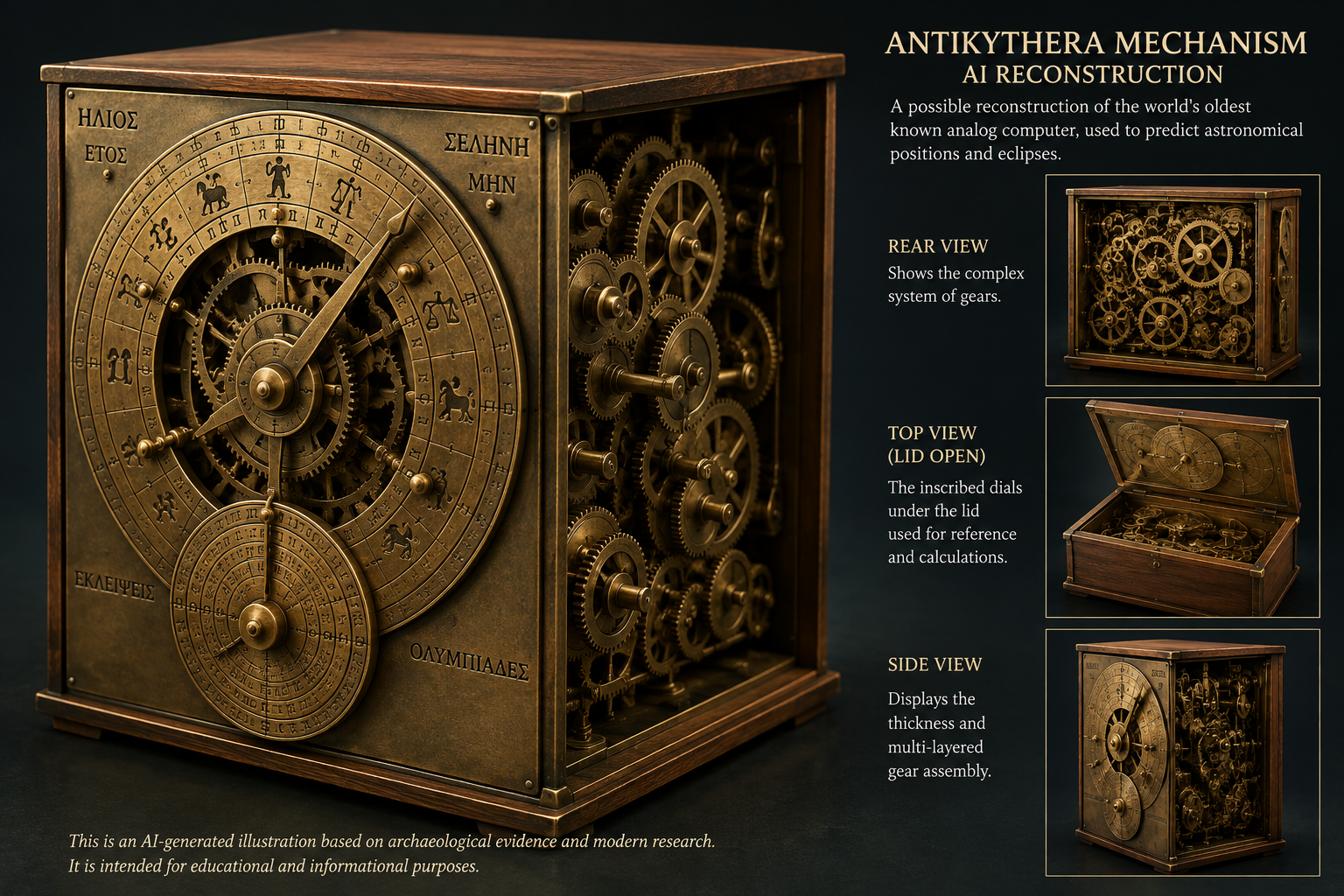
Although badly damaged, modern X-ray imaging and 3D scanning have revealed that the Antikythera Mechanism contained at least 30 interlocking bronze gears working together with astonishing precision. By turning a hand crank, the device could simulate the movements of the Sun, the Moon, and the five planets known to the ancient Greeks.
The front dial displayed the zodiac and the Egyptian calendar, while the rear dials tracked long astronomical cycles, including eclipse predictions based on the Saros cycle. Additional indicators calculated the dates of important Panhellenic games, including the Olympic Games.
Rather than serving as a simple clock, the mechanism functioned as an analog computer capable of modeling the heavens. Its engineering demonstrates an extraordinary combination of mathematics, astronomy, and mechanical craftsmanship that would not be matched for many centuries.
Why Is the Antikythera Mechanism So Important?
The Antikythera Mechanism fundamentally changed historians’ understanding of ancient technology. Before its discovery, many experts believed that mechanical devices of such complexity did not exist until medieval Europe, more than a thousand years later. The mechanism proved that Hellenistic engineers possessed an astonishing level of scientific and mechanical knowledge.
Its intricate gear system demonstrates that the ancient Greeks could accurately model astronomical movements using mathematics and precision engineering. The device combines astronomy, mechanics, and craftsmanship in a way that resembles the principles behind modern analog computers.
Today, researchers continue to study the mechanism using advanced technologies such as X-ray tomography and 3D imaging. Every new analysis reveals additional details, making the Antikythera Mechanism one of the most important archaeological discoveries ever found.
Quick Facts
- Estimated date: 150–100 BCE
- Discovery: Antikythera shipwreck, Greece (1901)
- Material: Bronze
- Function: Analog astronomical calculator
- Known gears: At least 30 bronze gears
- Current location: National Archaeological Museum, Athens
Frequently Asked Questions
What was the Antikythera Mechanism used for?
The Antikythera Mechanism was designed to calculate astronomical events with remarkable accuracy. It could predict solar and lunar eclipses, track the movements of the Sun and Moon, display the phases of the Moon, and determine the dates of important Greek athletic festivals, including the Olympic Games.
How old is the Antikythera Mechanism?
Archaeologists believe the mechanism was built between 150 and 100 BCE, making it more than 2,000 years old. It is considered the oldest known analog computer ever discovered.
Who invented the Antikythera Mechanism?
The exact inventor remains unknown. Many historians believe it was created by highly skilled Greek engineers influenced by the scientific traditions of Rhodes or Alexandria, two of the leading centers of science in the Hellenistic world.
Where is the Antikythera Mechanism today?
The surviving fragments of the Antikythera Mechanism are preserved and displayed at the National Archaeological Museum in Athens, Greece, where they continue to be studied using modern imaging technologies.
Why is the Antikythera Mechanism called the world’s first computer?
The device used an intricate system of bronze gears to perform mathematical calculations and predict astronomical events. Because it processed information mechanically, many historians describe it as the world’s earliest known analog computer.
Conclusion
More than a century after its discovery, the Antikythera Mechanism continues to challenge everything we thought we knew about ancient science. Its remarkable engineering proves that the civilizations of the ancient world possessed far greater technological knowledge than historians once believed.
Whether viewed as the world’s first analog computer or as one of archaeology’s greatest mysteries, the mechanism remains a symbol of human curiosity, innovation, and scientific achievement. As modern technology reveals new details hidden inside its bronze gears, the Antikythera Mechanism continues to rewrite the history of engineering.
Continue Exploring Ancient Mysteries
Hidden Ancient Cities Beneath Egypt’s Sands
Sources
Nature – Decoding the Ancient Greek Astronomical Calculator Known as the Antikythera Mechanism
National Archaeological Museum of Athens – Antikythera Mechanism
Encyclopedia Britannica – Antikythera Mechanism
NASA – Ancient Greek Astronomy and the Antikythera Mechanism