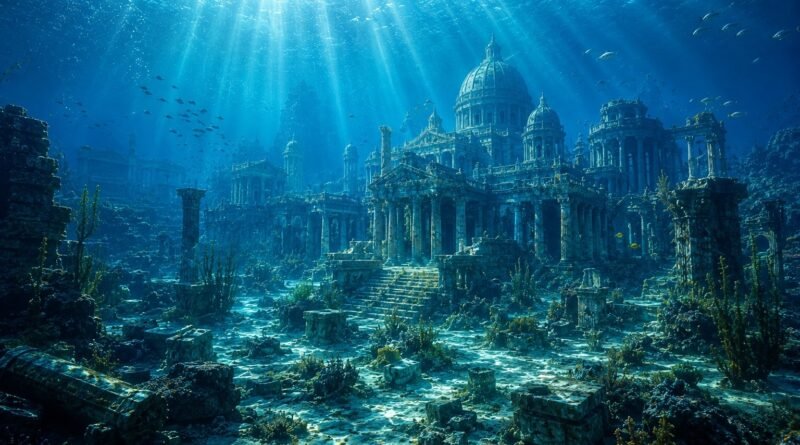
The Lost City of Atlantis: Myth, History, and the Search for a Lost Civilization
Introduction
The Lost City of Atlantis has fascinated historians, explorers, scientists, and dreamers for more than two thousand years. Was it simply a fictional story created by the ancient Greek philosopher Plato to teach moral lessons, or could it have been inspired by a real civilization that vanished after a natural disaster?
Over the centuries, countless theories have attempted to answer this question, leading researchers to search every corner of the globe—from the Mediterranean Sea to the Caribbean and even the Sahara Desert.
Today, the Lost City of Atlantis remains more than just an ancient legend. It has become a symbol of lost knowledge, forgotten civilizations, and humanity’s endless desire to uncover the truth hidden beneath history.
In this article, we will explore the origins of the Atlantis legend, examine the most popular theories, review scientific opinions, and discover why the mystery continues to capture the imagination of millions around the world.
What Is the Lost City of Atlantis?
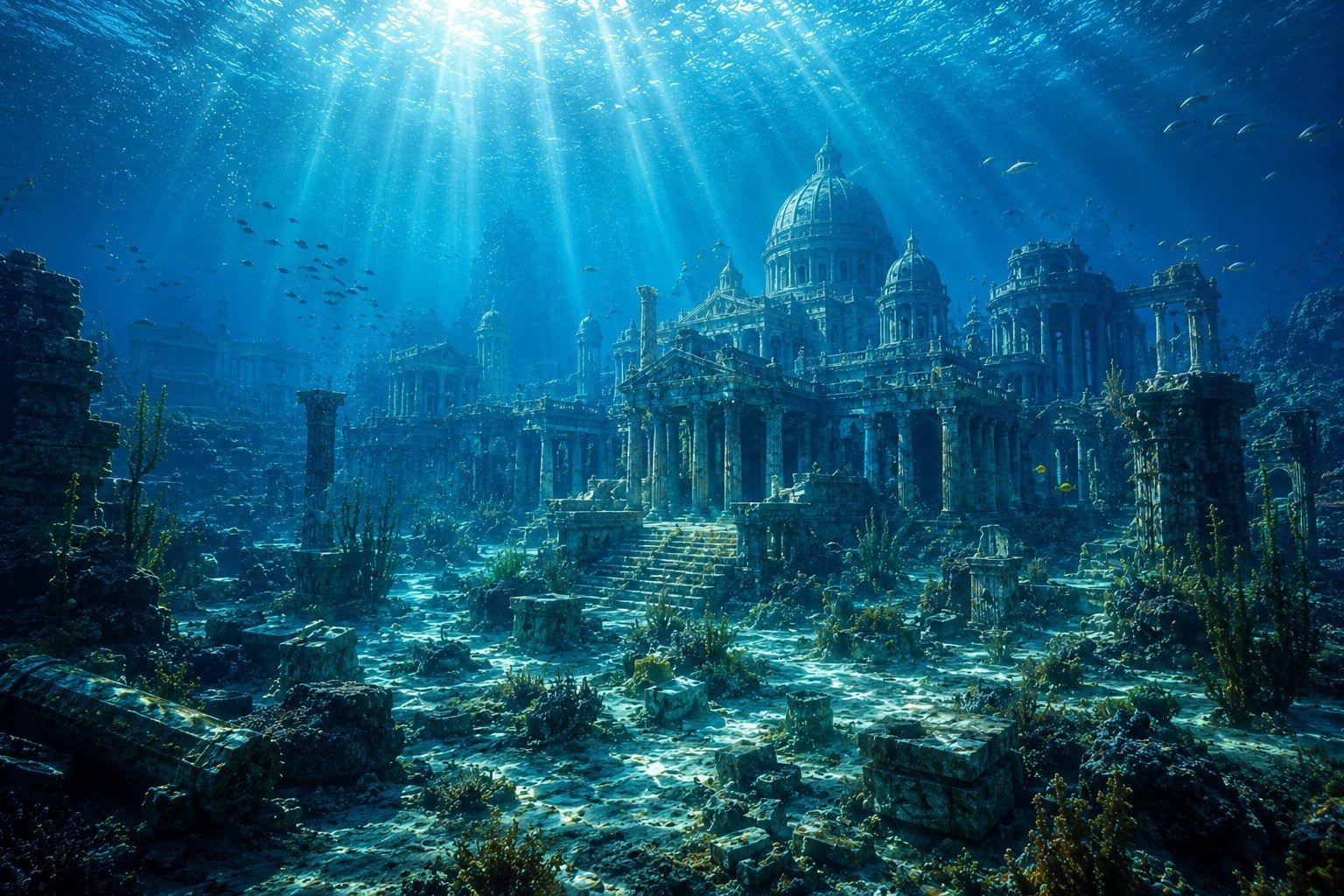
Atlantis is a legendary island first described by the ancient Greek philosopher Plato around 360 BCE in his dialogues Timaeus and Critias. According to Plato, Atlantis existed beyond the “Pillars of Hercules,” generally believed to refer to the Strait of Gibraltar.
Plato described Atlantis as an advanced maritime civilization blessed with fertile land, impressive architecture, abundant natural resources, and remarkable engineering. Its capital featured magnificent temples, canals, and concentric rings of land and water connected by sophisticated bridges.
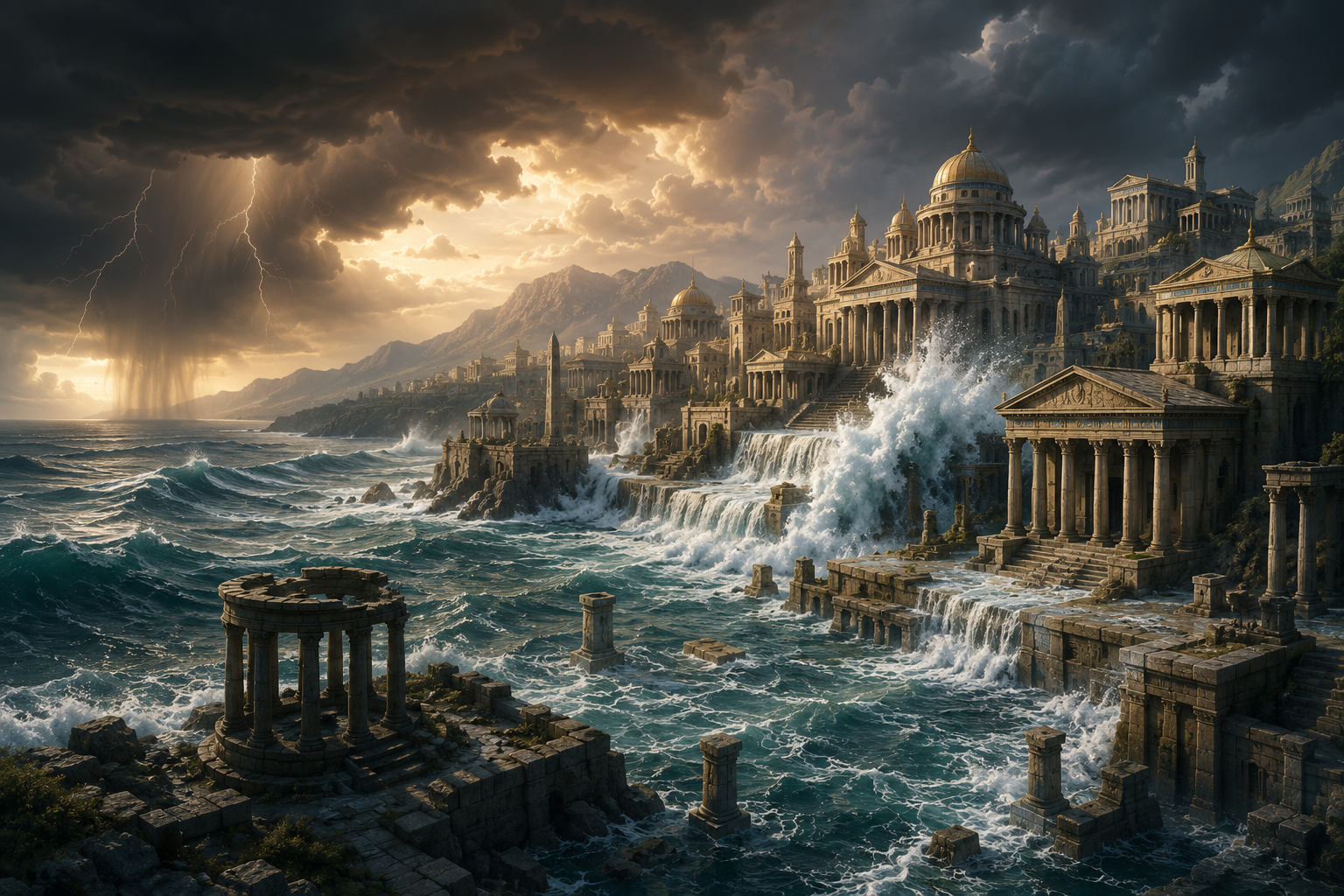
The Atlanteans were said to possess immense wealth and military power. As their empire expanded, however, they became increasingly greedy and corrupt. According to Plato, the gods punished Atlantis for its moral decline, causing earthquakes and floods that sank the entire island beneath the sea “in a single day and night of misfortune.”
Although many scholars believe Plato intended Atlantis as a philosophical allegory rather than a historical account, his vivid descriptions have inspired centuries of speculation.
The Story Told by Plato
According to Plato, the story of Atlantis was passed down through several generations before reaching him. He claimed that the Athenian statesman Solon heard the tale from Egyptian priests during his travels in Egypt around the 6th century BCE.
The priests reportedly told Solon that Atlantis had existed approximately 9,000 years before his lifetime. They described it as a mighty kingdom ruled by descendants of the sea god Poseidon. The island was divided into ten kingdoms, each governed by one of Poseidon’s sons while recognizing the eldest as supreme ruler.
Plato portrayed Atlantis as technologically advanced for its era. Massive harbors welcomed ships from across the known world, while carefully designed canals transported goods throughout the capital. Rich deposits of precious metals—including the mysterious substance known as orichalcum—made Atlantis one of the wealthiest civilizations of antiquity.
Despite its prosperity, Atlantis eventually sought to conquer neighboring lands, including ancient Athens. According to Plato, the Athenians courageously resisted the invasion. Soon afterward, catastrophic earthquakes and floods destroyed Atlantis, leaving no trace except its legend.
For historians, this narrative raises an important question: did Plato preserve an ancient historical tradition, or did he create an elaborate fictional story to illustrate the dangers of arrogance, greed, and political corruption?
Could Atlantis Have Been a Real Place?
For centuries, historians, archaeologists, and explorers have debated whether Atlantis was inspired by a real civilization. While no conclusive evidence has ever been discovered, several fascinating theories have emerged based on archaeological discoveries and geological events.
Santorini (Thera)
One of the most widely accepted theories links Atlantis to the ancient Minoan civilization on the island of Thera, now known as Santorini, in Greece.
Around 1600 BCE, one of the largest volcanic eruptions in recorded history devastated the island. The explosion generated enormous tsunamis that struck nearby Crete, damaging the powerful Minoan civilization.
Supporters of this theory point to several similarities:
- A wealthy maritime civilization.
- Advanced architecture and engineering.
- A sudden catastrophic destruction.
- An event remembered for generations.
However, critics argue that Plato’s timeline differs significantly, as he placed Atlantis roughly 9,000 years before Solon’s time.
The Richat Structure (Eye of the Sahara)
Another popular theory suggests that Atlantis may have been located in the Sahara Desert.
The Richat Structure, often called the Eye of the Sahara, is a massive circular geological formation in Mauritania measuring approximately 40 kilometers (25 miles) in diameter.
Some researchers claim its concentric rings resemble Plato’s description of Atlantis.
Supporters also argue that climate changes thousands of years ago transformed parts of the Sahara from fertile grasslands into desert, making it possible that ancient settlements once existed there.
Despite these intriguing similarities, geologists overwhelmingly conclude that the Richat Structure is a natural geological formation created by erosion over millions of years rather than the remains of a lost city.
The Caribbean Theory
Some explorers have proposed that Atlantis may lie somewhere beneath the Caribbean Sea or the Atlantic Ocean.
Reports of unusual underwater rock formations near the Bahamas, Cuba, and the Azores have fueled speculation for decades.
One of the most famous examples is the Bimini Road, a line of large limestone blocks discovered underwater near Bimini Island in the Bahamas.
While some enthusiasts believe these stones are remnants of an ancient harbor or roadway, marine geologists generally agree they are naturally formed beachrock shaped by coastal processes.
No archaeological evidence has confirmed the existence of a sophisticated civilization beneath these waters.
Antarctica Theory
A more controversial hypothesis places Atlantis beneath the ice of Antarctica.
Supporters argue that Earth’s crust may have shifted dramatically in the distant past, moving an ancient continent toward the South Pole.
Modern geology does not support this idea. Antarctica has been covered by ice for millions of years, long before humans existed, making this theory scientifically implausible.
Scientific Views on Atlantis
Today, most historians and archaeologists consider Atlantis to be a philosophical story rather than a historical account.
Several reasons support this conclusion:
- No verified archaeological site matches Plato’s description.
- No ancient civilization of the scale described has been discovered beneath the Atlantic Ocean.
- Plato is the only ancient author to provide a detailed account of Atlantis.
- His writings often used fictional settings to illustrate political and moral ideas.
Nevertheless, many scholars believe Plato may have drawn inspiration from real historical events, particularly the destruction of Bronze Age civilizations caused by earthquakes, volcanic eruptions, or tsunamis.
In this interpretation, Atlantis is neither entirely true nor entirely fictional—it is a legend built upon fragments of real history.
Ancient Technologies and the Atlantis Mystery
Part of Atlantis’s enduring appeal comes from claims that its people possessed extraordinary technology.
Over the years, writers have suggested that Atlanteans mastered:
- Advanced architecture.
- Sophisticated navigation.
- Powerful energy sources.
- Crystal technology.
- Flying machines.
- Lost scientific knowledge.
However, none of these claims are supported by archaeological evidence.
Most of these ideas originated in nineteenth- and twentieth-century speculative literature rather than ancient historical records.
Even so, they continue to inspire novels, films, documentaries, and discussions about forgotten civilizations and humanity’s technological past.
Why Atlantis Continues to Fascinate the World
More than two millennia after Plato first described Atlantis, the legend continues to inspire curiosity across cultures and generations. Few ancient stories have captured the human imagination so powerfully.
One reason for its lasting appeal is that Atlantis represents the possibility that history still holds undiscovered secrets. Every major archaeological discovery—from the ruins of Troy to the ancient city of Petra—reminds us that civilizations once dismissed as myths can sometimes have historical foundations.
Atlantis also symbolizes humanity’s fear of losing knowledge. The idea that an advanced civilization could vanish almost overnight encourages people to reflect on the fragility of even the greatest societies. In an age of climate change, natural disasters, and technological dependence, this message feels more relevant than ever.
Popular culture has also played a major role in keeping the legend alive. Atlantis appears in books, films, documentaries, television series, and video games, often portrayed as a civilization with extraordinary wisdom or advanced technology. While these fictional depictions are entertaining, they should not be confused with historical evidence.
Ultimately, whether Atlantis existed or not may be less important than what the story represents. It reminds us that curiosity drives exploration, and that the search for answers often reveals just as much about ourselves as it does about the past.
Frequently Asked Questions
Was Atlantis a real city?
There is no confirmed archaeological evidence proving that Atlantis existed. Most historians consider it a fictional or symbolic story, although some researchers believe it may have been inspired by real ancient disasters.
Who first wrote about Atlantis?
The Greek philosopher Plato introduced Atlantis in his dialogues Timaeus and Critias around 360 BCE.
Where was Atlantis supposedly located?
Plato stated that Atlantis was beyond the Pillars of Hercules, generally identified as the Strait of Gibraltar. Modern theories suggest locations ranging from Santorini to the Atlantic Ocean, but none have been proven.
Why did Atlantis disappear?
According to Plato, Atlantis was destroyed by earthquakes and floods after its people became morally corrupt and sought to conquer neighboring civilizations.
Has Atlantis ever been found?
No. Despite numerous expeditions and theories, no verified archaeological discovery has confirmed the existence of Atlantis.
Related Ancient Mysteries
If you enjoyed exploring the mystery of Atlantis, you may also be interested in these fascinating ancient discoveries that continue to challenge historians and archaeologists.
The Antikythera Mechanism is often called the world’s first computer and remains one of history’s greatest archaeological mysteries.
Discover the story of Hidden Ancient Cities Beneath Egypt’s Sands, where archaeologists continue to uncover remarkable evidence of forgotten civilizations.
Conclusion
The legend of Atlantis remains one of history’s greatest mysteries because it exists at the intersection of mythology, philosophy, archaeology, and human imagination. While modern science has found no evidence of a lost super-civilization beneath the sea, the possibility that Plato drew inspiration from real historical events cannot be entirely dismissed.
Whether Atlantis was a cautionary tale, a distorted memory of an ancient catastrophe, or simply one of the world’s greatest legends, its story continues to inspire exploration and debate. As archaeological discoveries reshape our understanding of the ancient world, the mystery of Atlantis reminds us that history still holds countless secrets waiting to be uncovered.
Perhaps the greatest lesson of Atlantis is not whether it truly existed, but why humanity continues searching for it.
Interested in more mysterious discoveries? Read our previous article to explore another fascinating mystery.